Stern’s Dragon
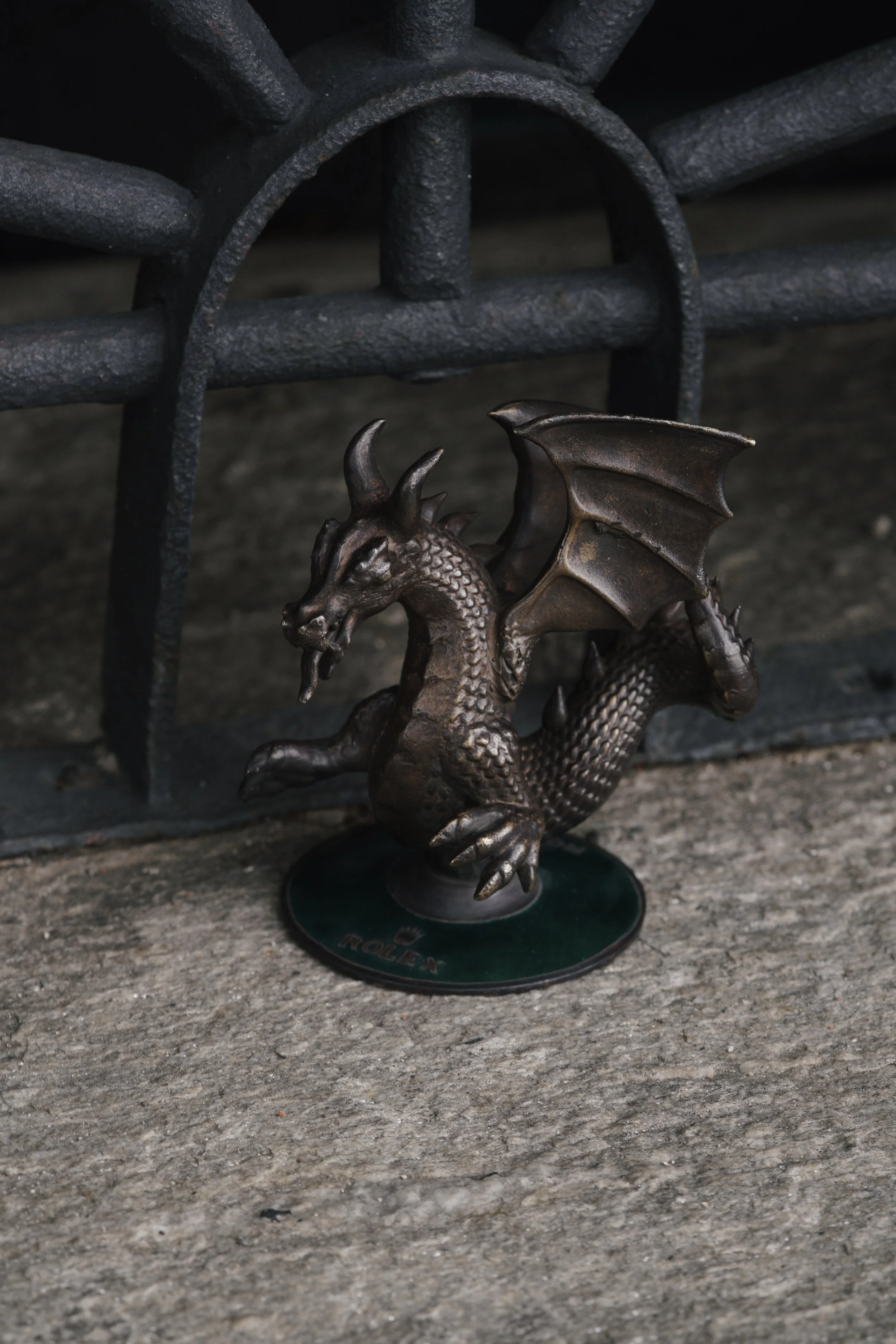
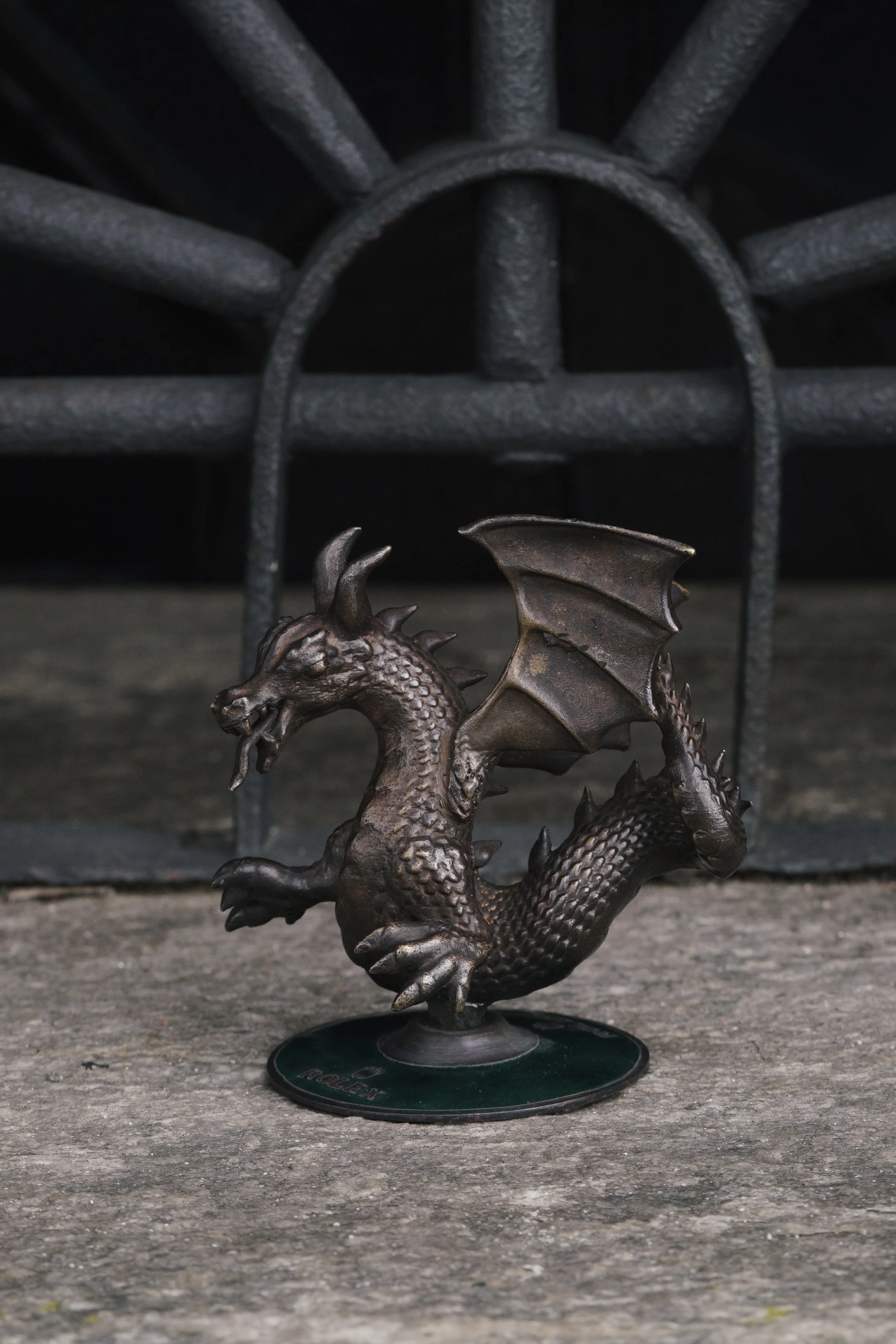
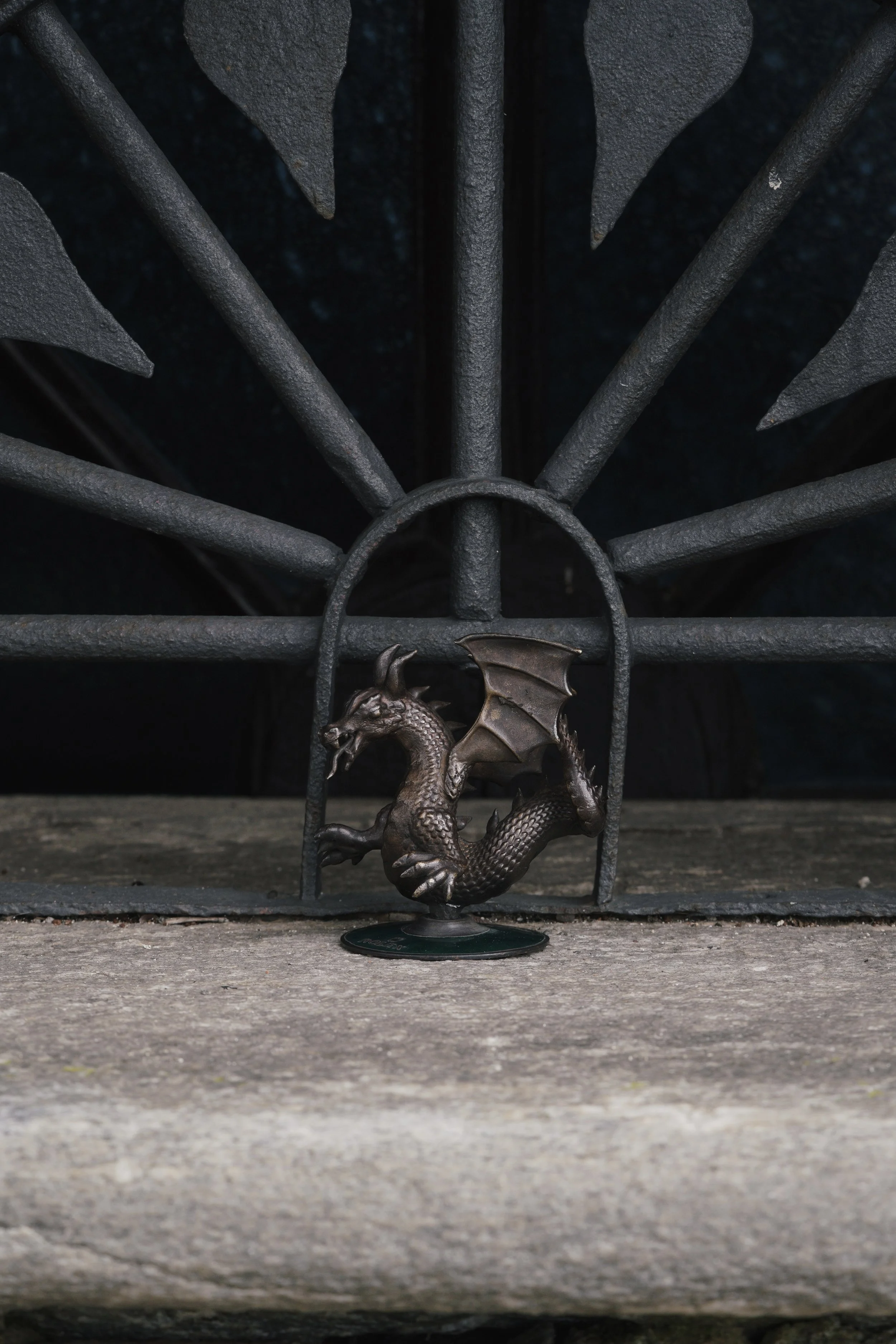
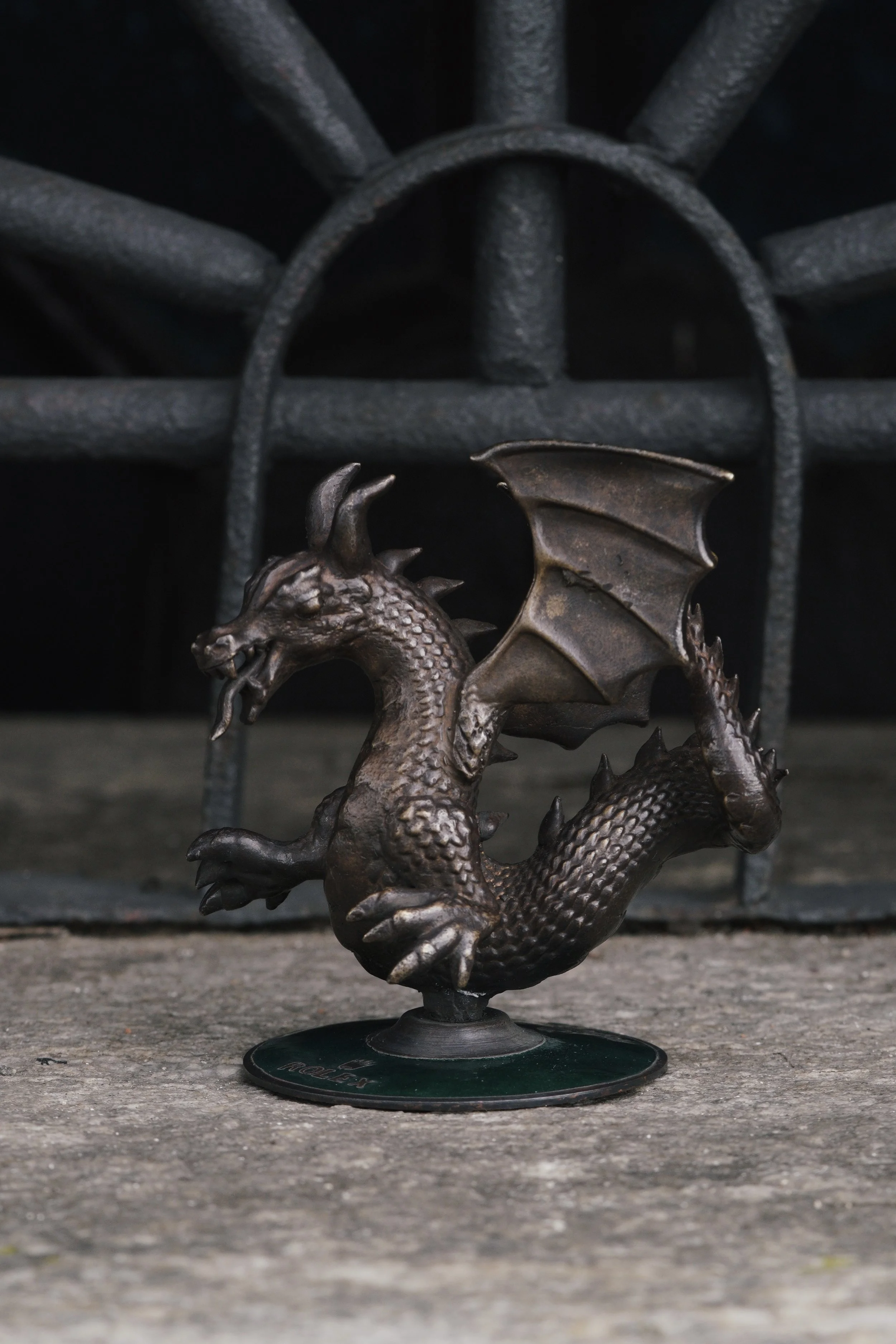
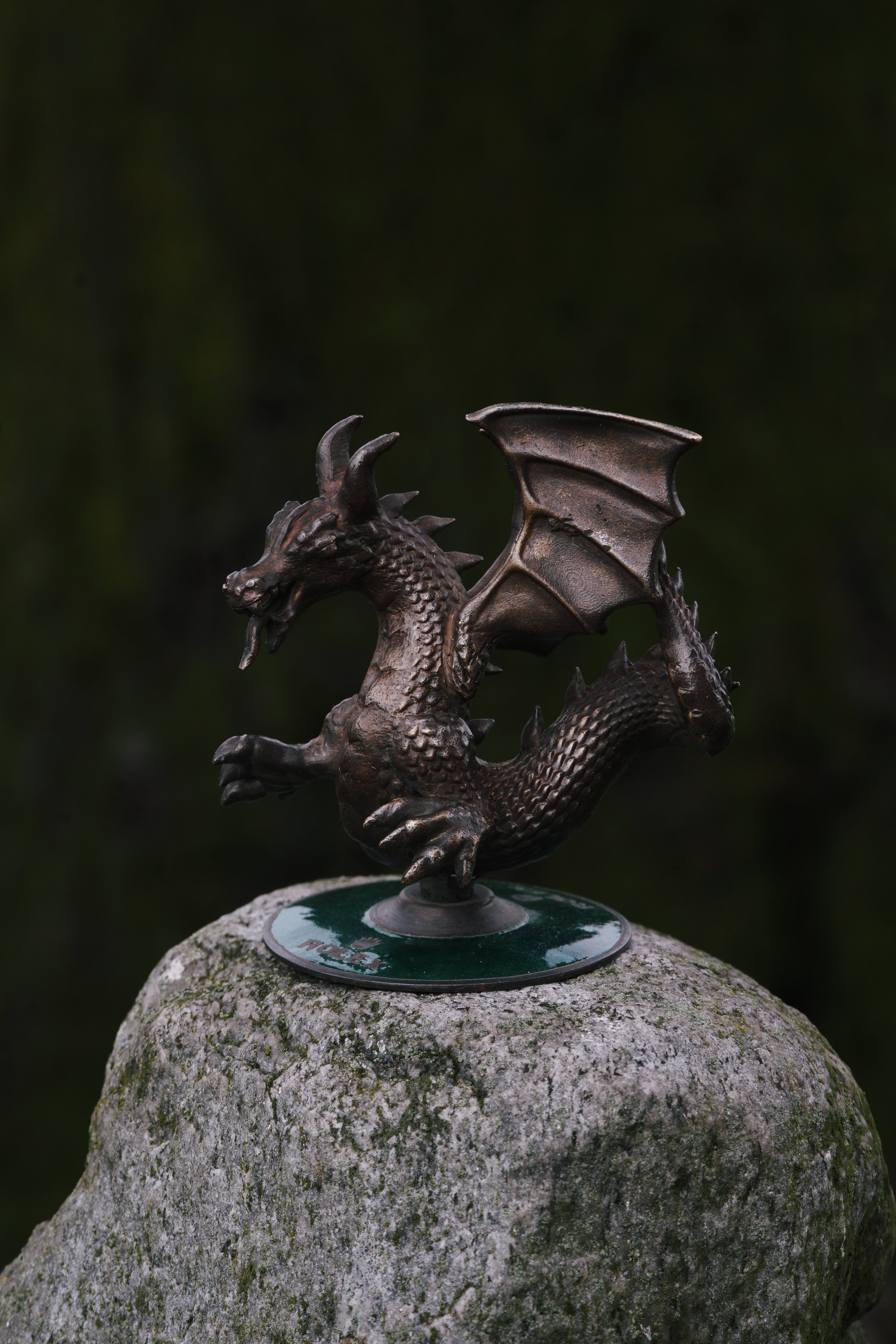
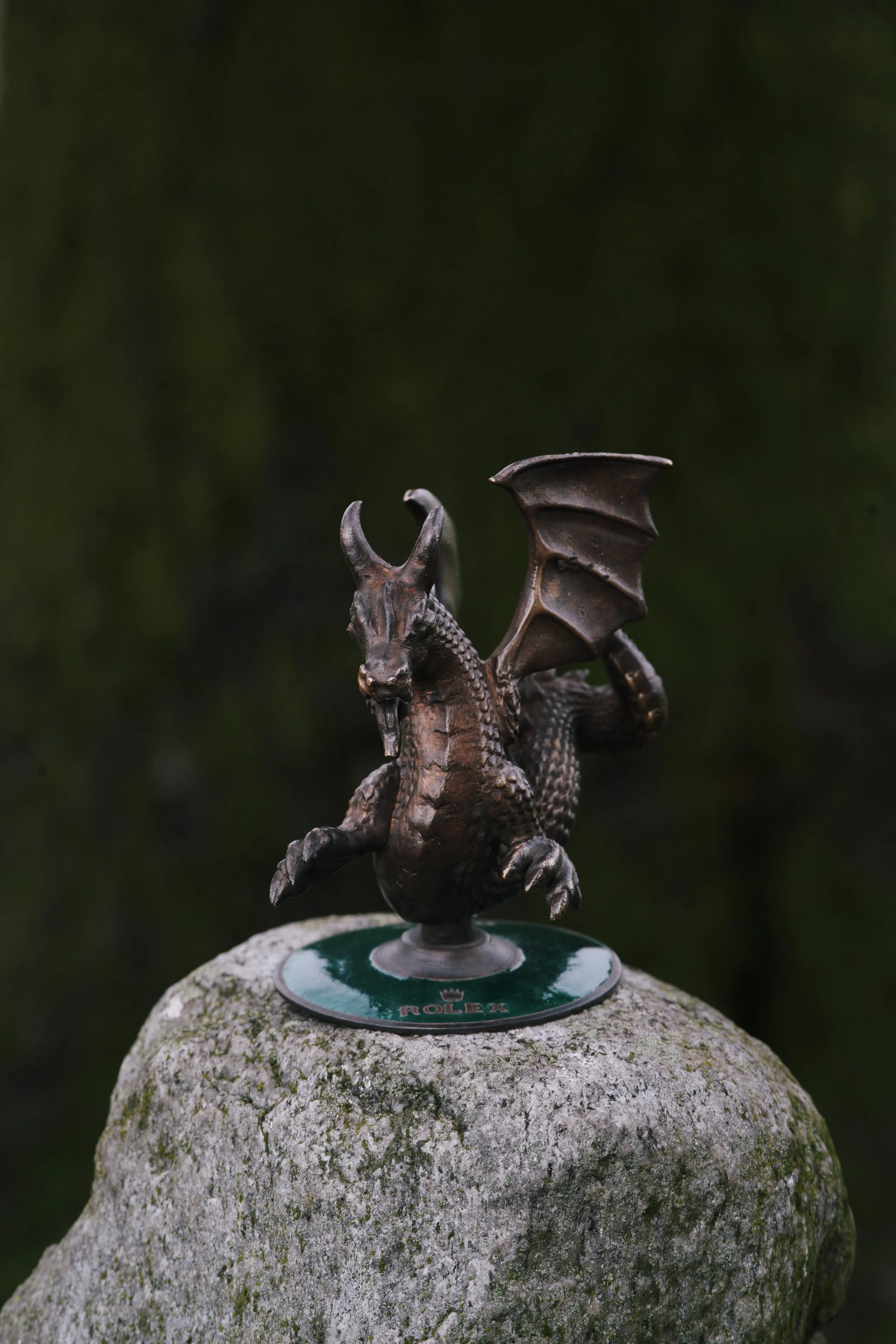
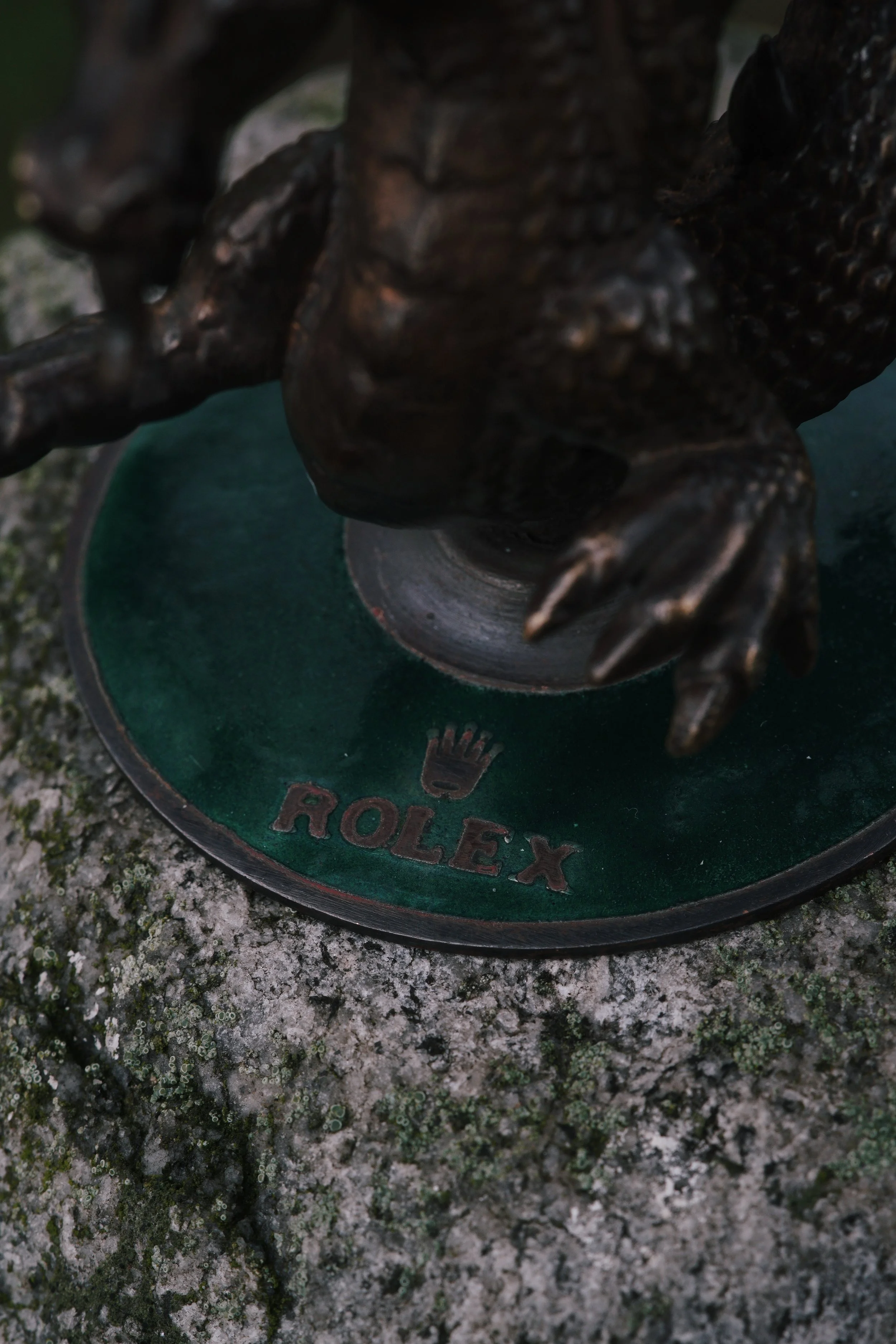
We have found an extremely rare Rolex boutique display, datable to the late 1940s and early 1950s, depicting a brass statuette with a dragon motif.
The sculpture is mounted on an enamelled base in the classic Rolex green, an element that reinforces its institutional identity and confirms its intended destination for selected boutiques catering to an elite clientele.
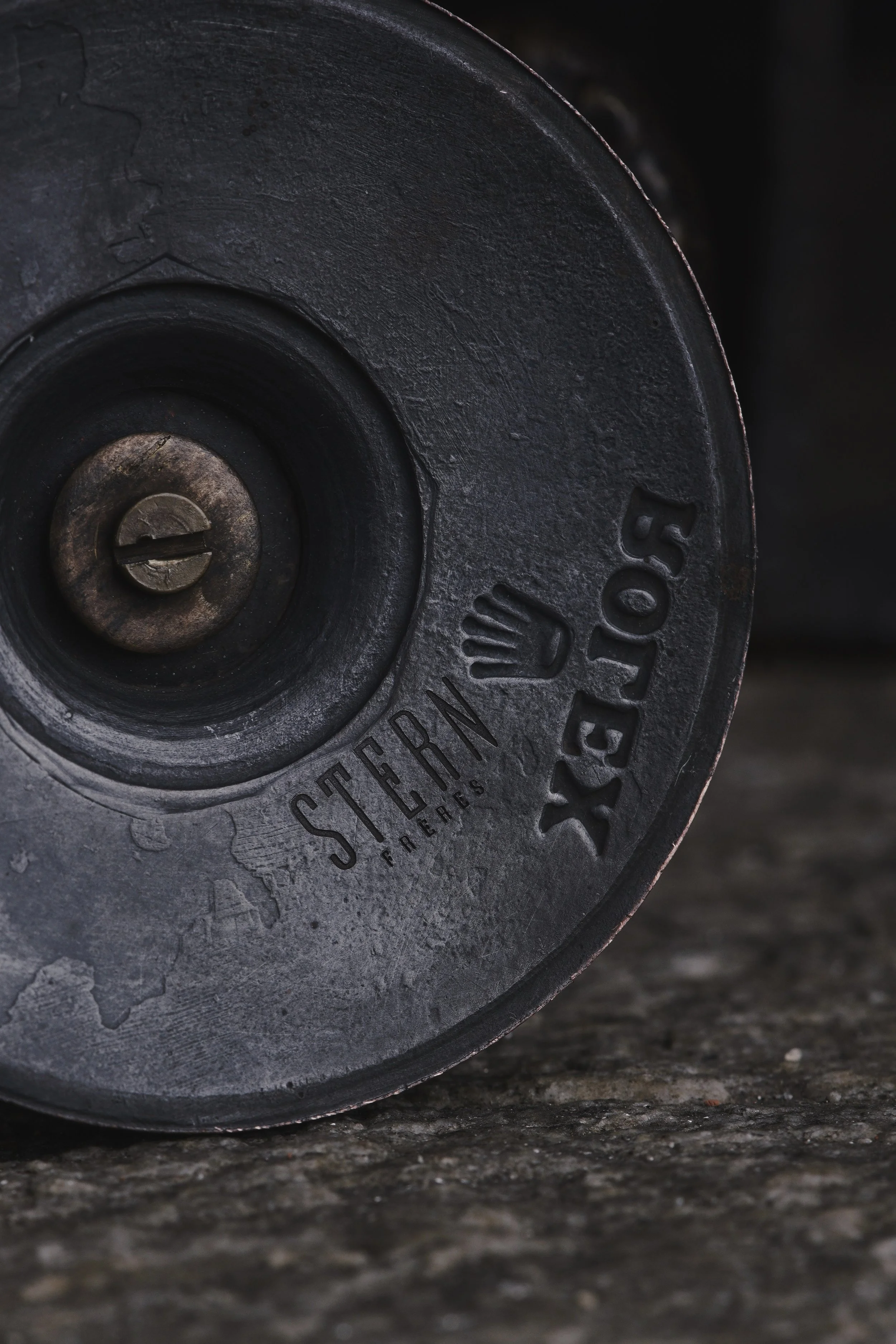
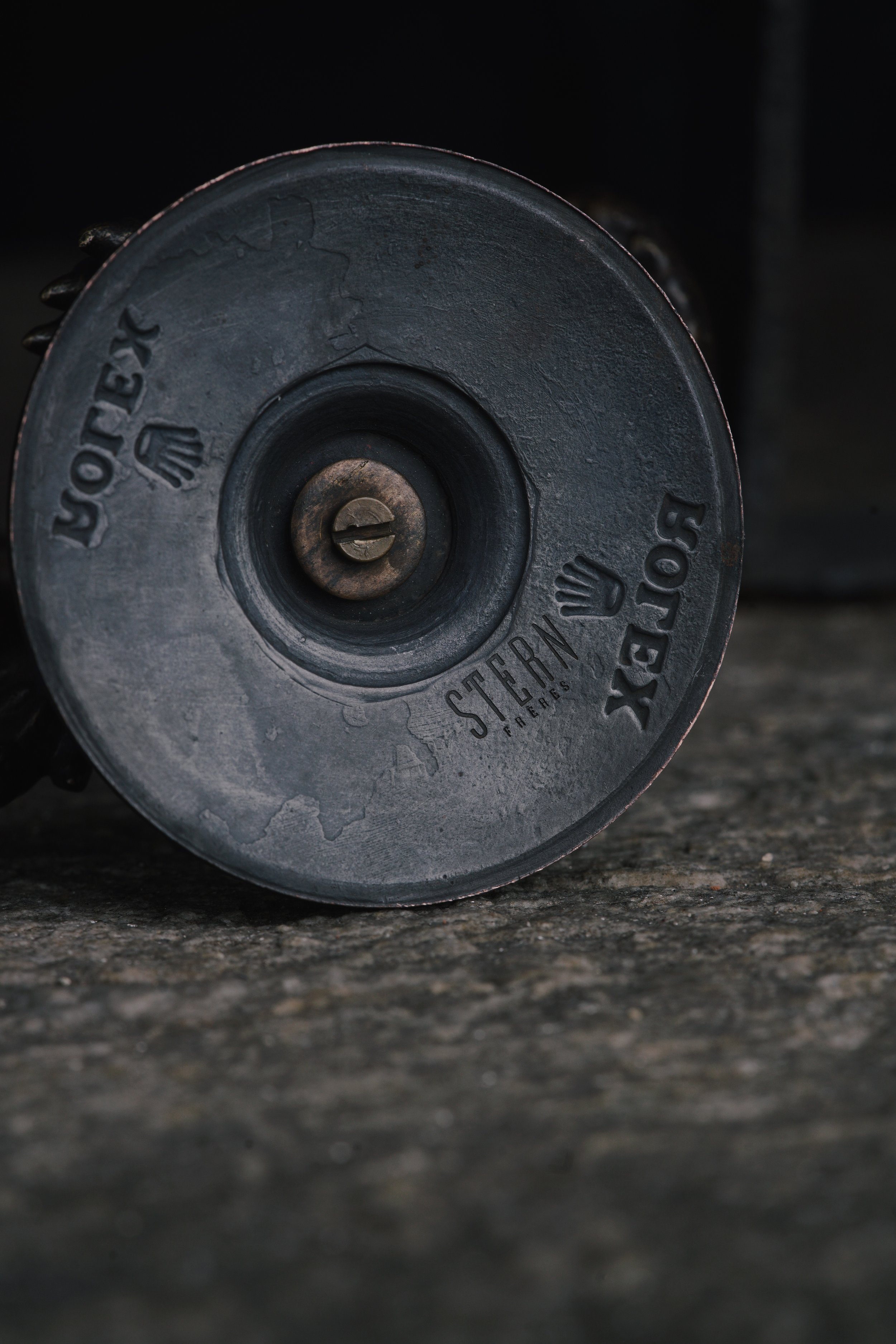
A detail of absolute historical significance is the attribution of the piece to Stern: beneath the base there is in fact an original Stern hallmark. This creates a direct connection with the very same Geneva-based manufacture responsible for producing Rolex’s celebrated cloisonné enamel dials, including the exceedingly rare dragon-themed examples.
This element significantly strengthens the hypothesis that the dragon was not a casual or isolated subject, but rather part of a coherent and deliberately constructed symbolic imagery used by Rolex. The presence of a display statuette featuring the same iconographic subject as the cloisonné dials strongly suggests a true conceptual fil rouge linking unique watches and high-quality boutique furnishings created for Rolex’s authorized retailers of the period. Most importantly, it points to a collaboration with Stern not merely as a dial maker, but as an artistic and industrial partner.
⸻
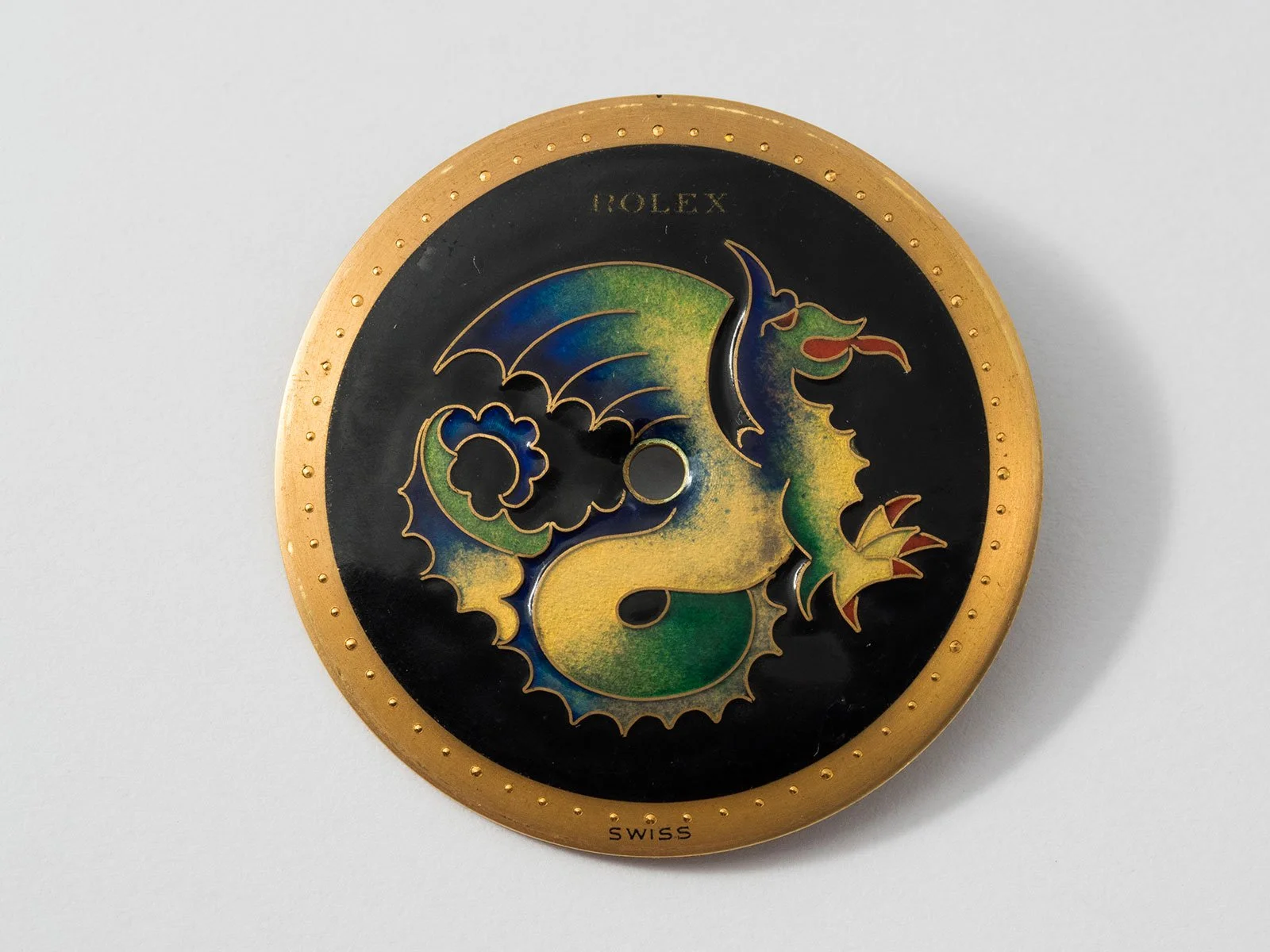
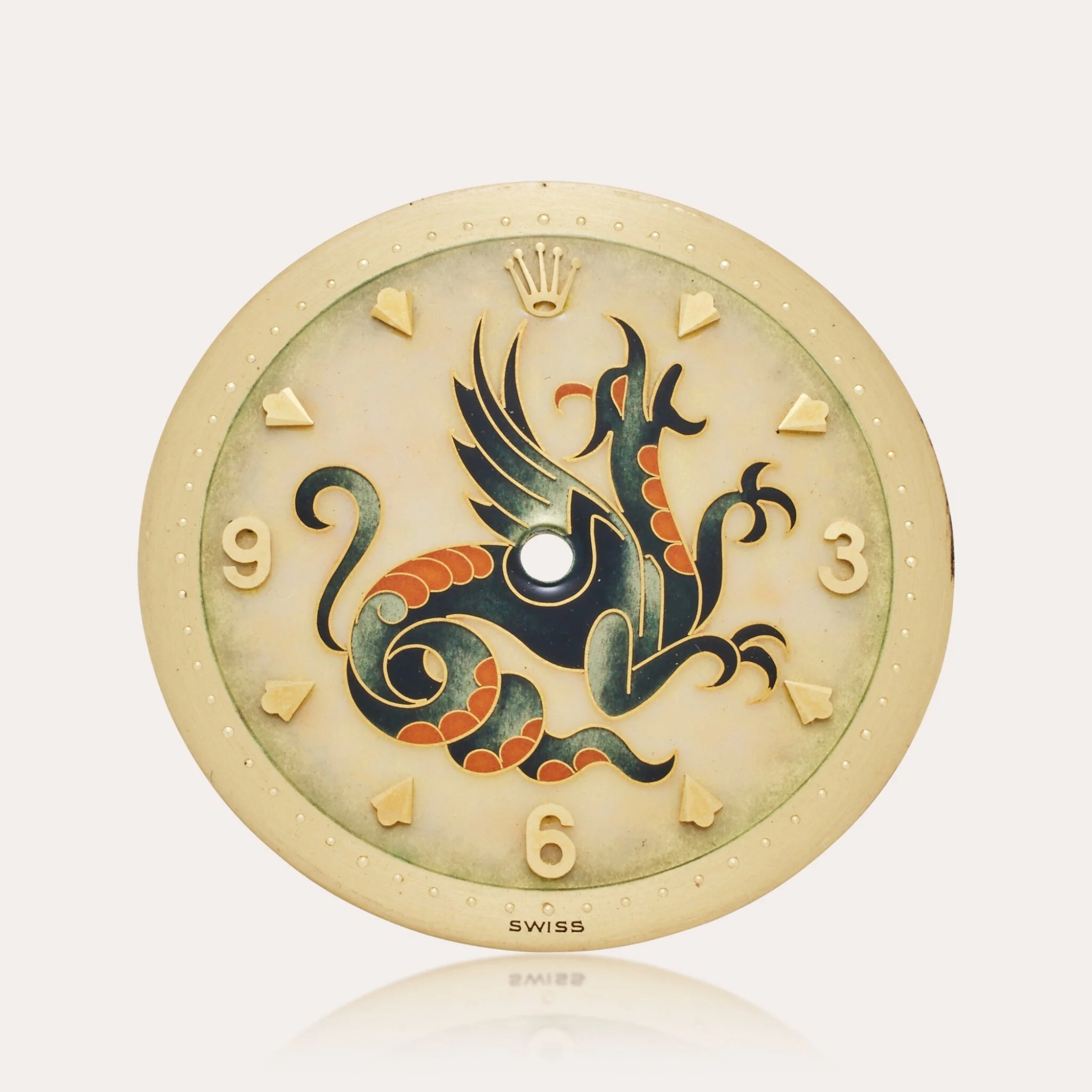
Between the late 1940s and the 1950s, Rolex produced a handful of extraordinarily rare watches fitted with cloisonné enamel dials featuring a “dragon” motif. These dials were handcrafted on 18k gold bases by Stern Frères (today Stern Créations) and entrusted to some of the most renowned enamel artists of the era, including Nelly Richard, Marguerite Koch, and Carlo Poluzzi.
Only a very small number of examples are known today: to date, just five dragon cloisonné dials have been publicly documented, each mounted in a different case and never repeated, as each required numerous stages of manual craftsmanship.
⸻
Cloisonné enamel is an ancient artisanal technique of extraordinary complexity. Ultra-fine gold wires are shaped to create the cloisons—small compartments that define the design—which are then filled with colored glass powders. The dial, generally made of copper or 22k yellow gold (preferred for its thermal conductivity), is subjected to repeated firings in a kiln at approximately 900°C. After each firing, the surface is carefully ground by hand to achieve perfect flatness.
This process produces deep, vibrant colors and extremely subtle tonal transitions. In the Rolex dragon dials of the 1950s, the green-gold hues of the dragon’s sinuous body are the result of numerous successive applications and firings, making each dial truly unique.
Stern Frères worked with master enamel artists of the highest caliber: most high-end figurative dials of the period—landscapes, maps, and mythological creatures—were entrusted to Nelly Richard, Marguerite Koch, and Carlo Poluzzi. The most celebrated dragon dials are attributed specifically to Richard or Poluzzi. Each dial required a full day of work, and only a very limited number were produced each year. The enamel recipes, based on oxides no longer in use today, remain an irreproducible secret; for this reason, the original colors of these dials cannot be replicated. Hands and hour markers were often made of solid 18k gold, in keeping with the dial’s exceptional level of refinement.
⸻
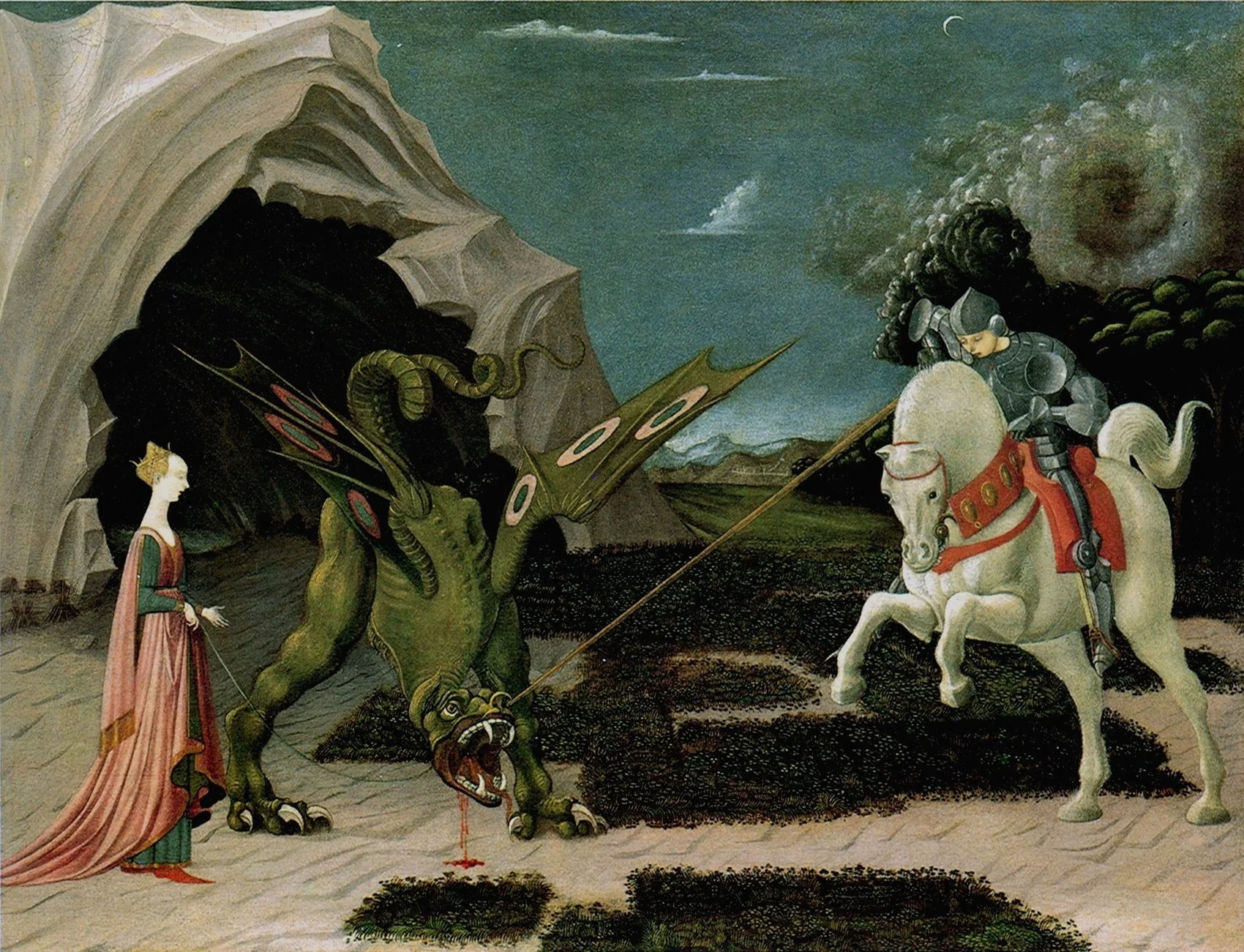
The dragon is an ancient and powerful symbol, present across many cultures. In the East, particularly in Chinese tradition, it represents prosperity, wisdom, protection, and imperial power, and is associated with fertility and vital energy. In the West, while sometimes taking on darker or more menacing connotations, the dragon nonetheless remains an emblem of strength, mystery, and power.
An image that clearly alludes to status, energy, and authority. The presence of the same iconographic subject on a boutique display further confirms that Rolex had already developed, in those years, a refined and coherent symbolic language—one intended for a very small and highly select audience.